An opinion journal — Vol. I, No. 1 — Currently reading: the Founding Documents

America’sBig Why.

Opinions about many things — politics, mostly. We begin where the argument begins: what the Founding Documents are, why they exist, how they came to be, and when. Then we say what we think.

Read the

Sources

est. 1776

What they areWhy they areHow they came to beWhen
01

The Premise

Why this journal exists.

Everyone has opinions about America. Far fewer have read the four documents America is made of.

This is an opinion journal about many things — politics, mostly — and it starts at the source. Between 1776 and 1791, a group of colonies wrote down what they believed, tried a government that failed, built one that didn’t, and then immediately amended it. That paper trail is the subject of Volume I.

The method is simple: read the primary sources, state the facts, then state the opinion — clearly labeled, never disguised as fact.

02

The Documents

01

The Declaration of Independence

Adopted July 4, 1776

What it is

The break-up letter. One page that announces the colonies’ separation from Britain and states the philosophy underneath it: all men are created equal, rights are unalienable, and governments exist to secure them.

Why it exists

To justify revolution before “a candid world” — and to define, for the first time, what makes any government legitimate: the consent of the governed.

The opinion

“The only founding document that tells you what America believes, rather than how it operates. Read this one first.”
02

The Articles of Confederation

Ratified March 1, 1781

What it is

America’s first constitution: a “firm league of friendship” between thirteen sovereign states, with a Congress that could request money but not raise it — and no executive or courts at all.

Why it exists

Fresh off a king, the states feared central power more than they feared dysfunction, so they built a government too weak to tyrannize anyone. Including itself.

The opinion

“A controlled experiment in weak government. It failed within six years — and that failure is the Constitution’s true origin story.”

03

The Constitution

Signed September 17, 1787

What it is

The operating system. Three branches, separated powers, checks and balances, federalism — a framework for making decisions without a king, and for changing the rules without a war.

Why it exists

The Articles couldn’t tax, enforce laws, or fund an army. When Shays’ Rebellion exposed the weakness in 1786, fifty-five delegates met behind closed doors in Philadelphia to repair the machine — and quietly replaced it.

The opinion

“Not sacred text — a repair manual written by people who had just watched the first machine break.”

04

The Bill of Rights

Ratified December 15, 1791

What it is

The first ten amendments: speech, press, religion, assembly, arms, due process, jury trials — and a catch-all declaring that unlisted rights are retained by the people.

Why it exists

The price of ratification. Anti-Federalists refused to accept the Constitution without written limits on the new federal power, and Madison delivered them.

The opinion

“The founders’ own bug-fix release — proof the document was built to be argued with.”

Continue readingThe Constitution was built to be a living documentA sourced article on Article V, the twenty-seven amendments, and the founders’ own words on revision — with sources you can check.Read the article

From the Archive

Indexed media — handle with care

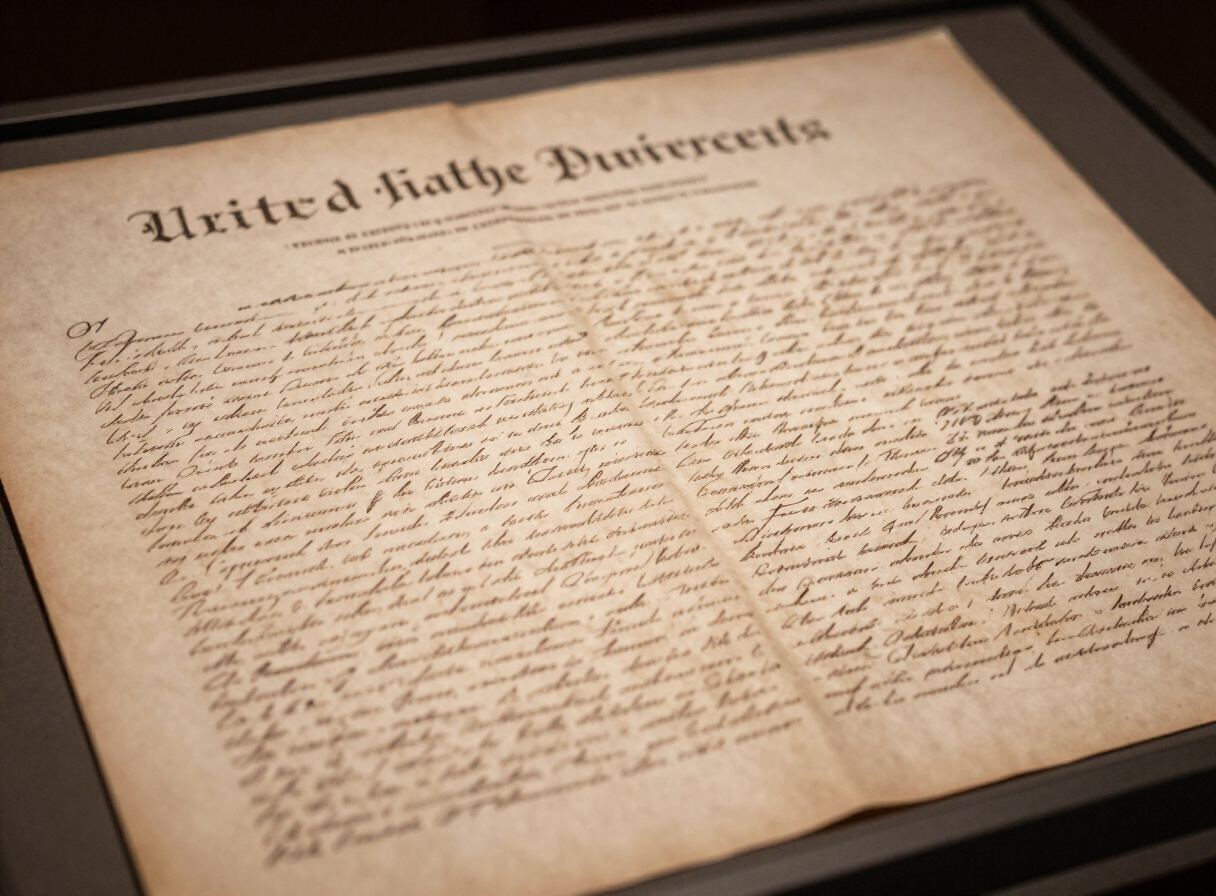
The Declaration of Independence parchment under glass at the National Archives
Fig. 01The Declaration, faded but legible. National Archives, Washington, D.C.
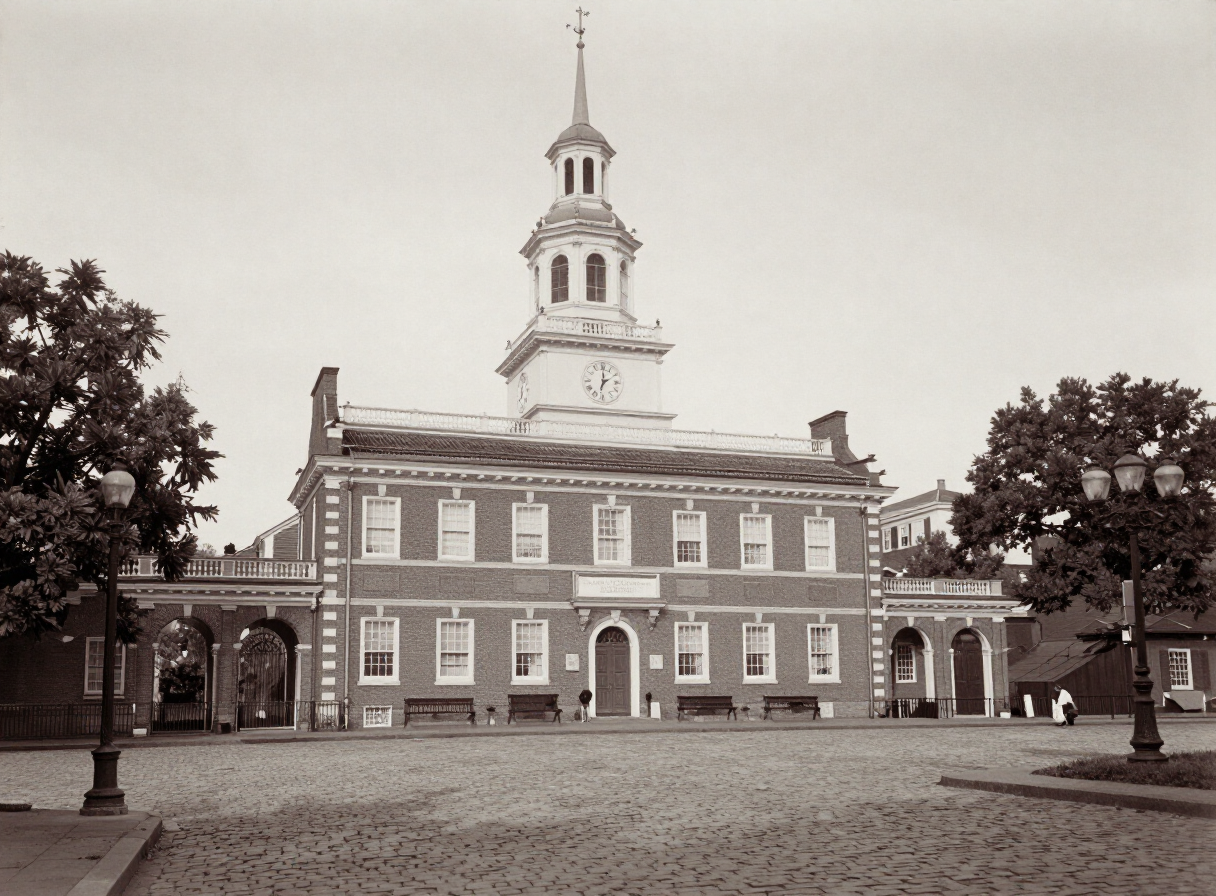
Independence Hall in Philadelphia, where the Declaration and Constitution were debated
Fig. 02Independence Hall, Philadelphia. Both documents argued out in one room.
A quill in an inkwell resting on parchment beside spectacles
Fig. 03The instruments of the argument: quill, ink, and patience.
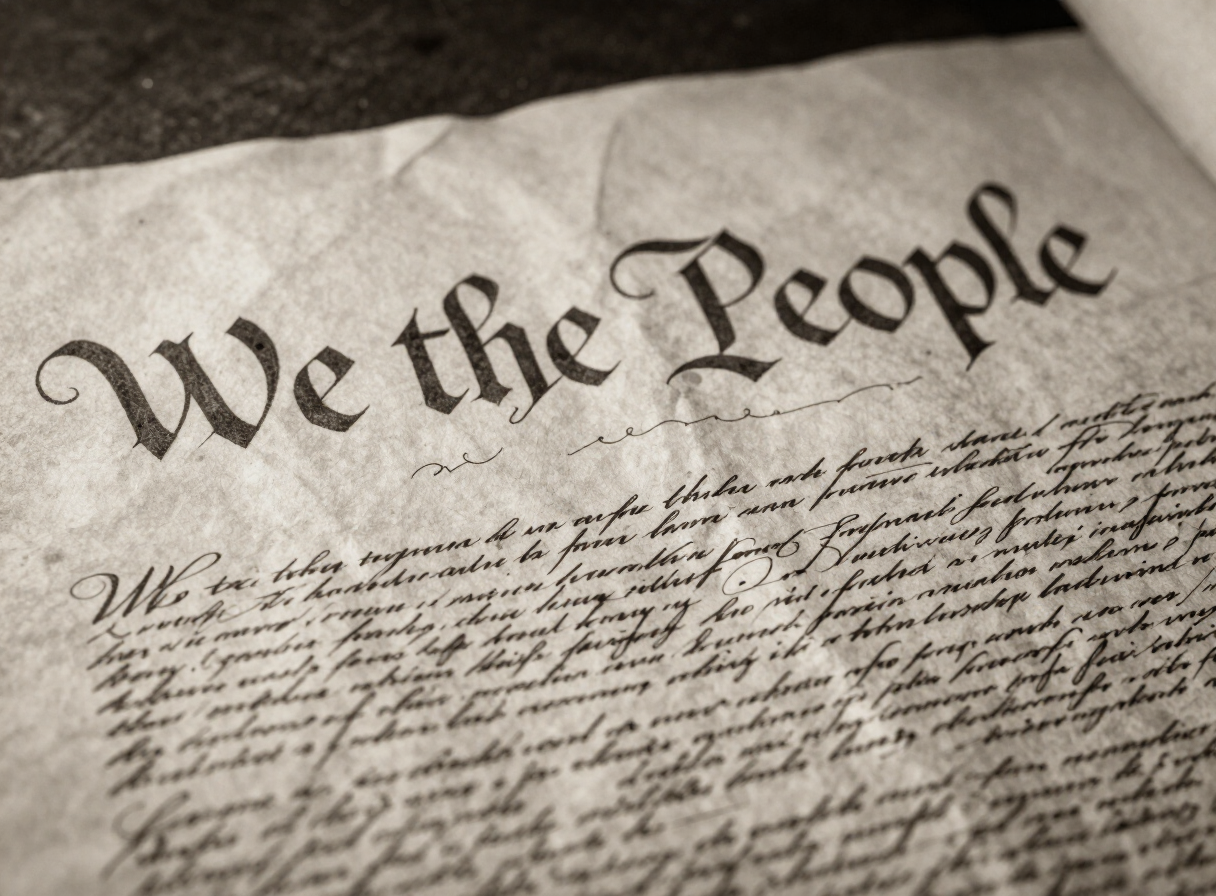
Detail of the Constitution parchment showing the words We the People
Fig. 04“We the People” — three words doing the work of a crown.
03

How It Came to Be

  1. 1765

    The Stamp Act

    Britain taxes the colonies to pay off war debts. “No taxation without representation” enters the argument — and never leaves.

  2. 1773

    The Boston Tea Party

    342 chests of tea go into the harbor. Protest becomes property destruction; Parliament answers with the Intolerable Acts.

  3. 1774

    First Continental Congress

    Twelve colonies meet in Philadelphia to coordinate resistance. The habit of acting as one begins here.

  4. 1775

    Lexington & Concord

    The shooting starts. The argument over representation becomes a war for independence.

  5. 1776

    The Declaration

    Adopted July 4 in Philadelphia. The colonies become states — and, crucially, the why gets written down.

  6. 1781

    The Articles Take Effect

    Drafted in 1777, ratified mid-war in 1781. America’s first frame of government: thirteen sovereign states, one deliberately weak center.

  7. 1786

    Shays’ Rebellion

    Broke farmers close the courts in Massachusetts, and the national government cannot raise an army to respond. The Articles’ obituary, written in advance.

  8. 1787

    The Constitutional Convention

    Fifty-five delegates, one Philadelphia summer, windows shut, debates in secret. The Constitution is signed on September 17.

  9. 1788

    Ratification

    New Hampshire becomes the ninth state to ratify, and the Constitution takes effect. The Federalist Papers argued it into existence.

  10. 1791

    The Bill of Rights

    Ten amendments ratified on December 15. The argument gets its guardrails — in writing.

The argument was the point.

No. 04 — The Big Why

Rights come first. Government comes second. Consent makes it legitimate.

“Governments are instituted among Men, deriving their just powers from the consent of the governed.”

— The Declaration of Independence, 1776

The Declaration is the why: people hold rights before any government exists, and governments are built — and rebuilt — to secure them.

The Constitution is the how: a machine of separated powers, designed so that no one ever rules unchecked.

The Bill of Rights is the guardrail: ten written limits, added immediately, because the founders trusted written argument more than good intentions.

No kings. Not then, not now.

05

Current Opinions

Opinion No. 01

The Declaration is the mission statement; the Constitution is the org chart. Argue about the second only after you’ve read the first.

Opinion No. 02

The Articles of Confederation are the most underrated founding document — proof the founders learned from failure instead of mythologizing it.

Opinion No. 03

“Original intent” is a strange phrase for a document whose own authors immediately amended it ten times.

Opinion No. 04

The founding wasn’t a moment. It was a fifteen-year argument, 1776 to 1791 — and the argument was the point.

New opinion — full articleRepublicans Are Walking Away From Congress’s Core DutiesA sourced look at how the 119th Congress traded legislating and oversight for messaging and loyalty — with citations you can check.Read the articleNew opinion — full articleElection 2026: Fair and Free — It Used to BeA sourced look at the pillars of election integrity, the erosion of public confidence, and what a voter can do before Election Day — with citations you can check.Read the articleNew opinion — full articleUnited States of America Countdown to Election 2026A plain-language countdown to the 2026 midterms — what is on the ballot, the deadlines that decide whether a vote counts, and how to take part — with citations you can check.Read the article

More opinions on more things — political and otherwise — filed here as they are formed. Disagreement welcome; bring sources.